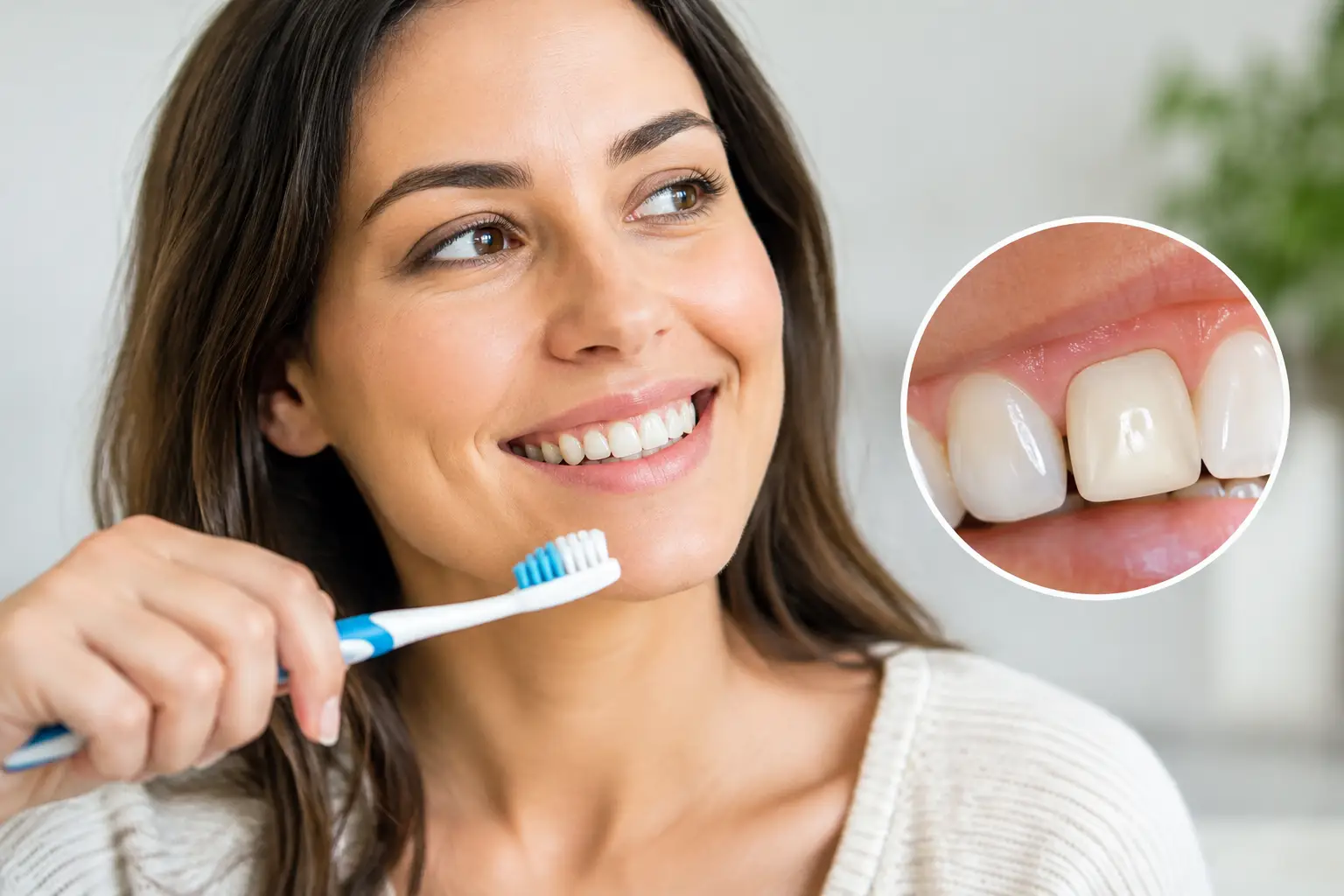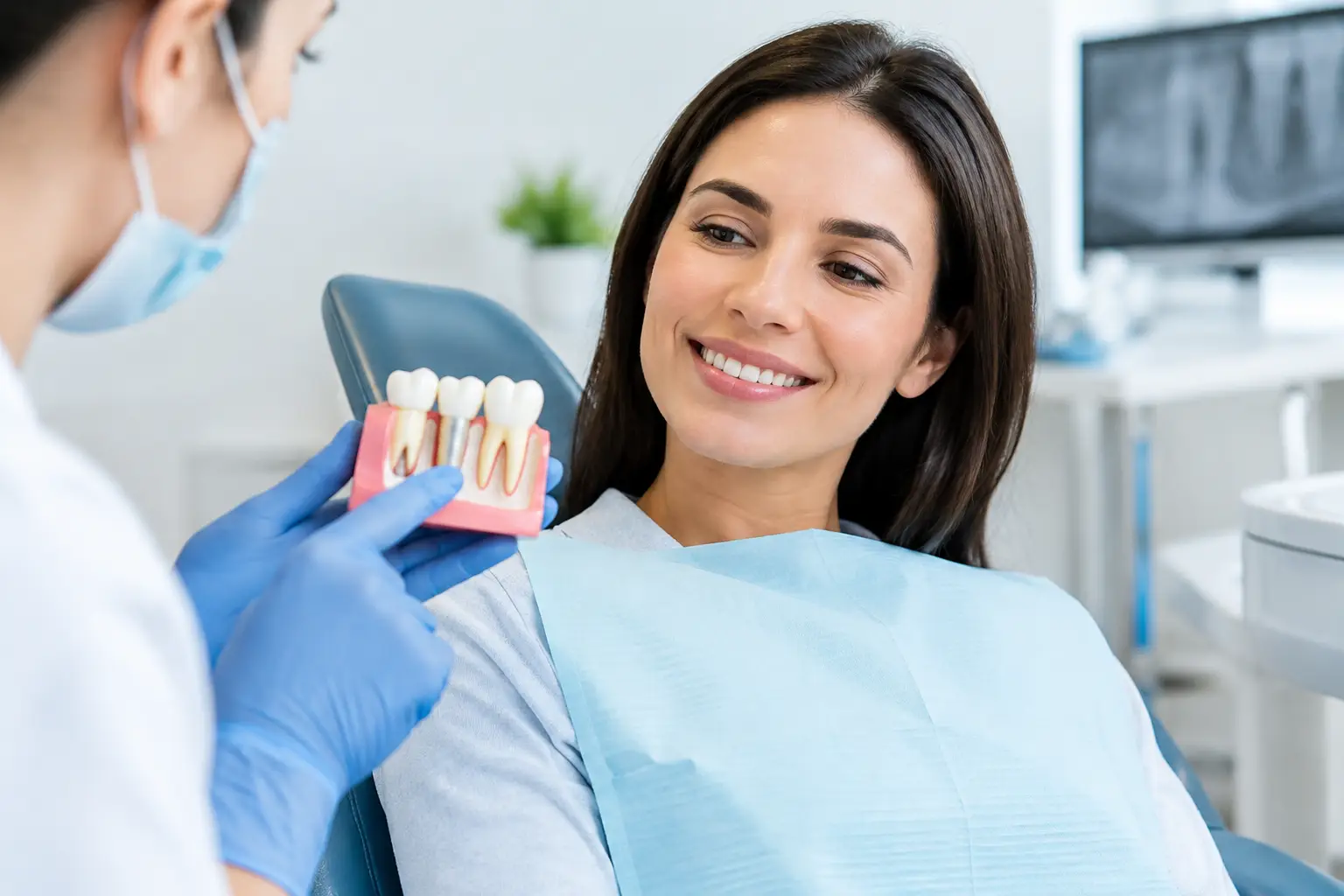
A dental implant can feel so much like a natural tooth that it is easy to forget it needs a slightly different kind of attention. Knowing how to brush around implants protects the gum tissue and bone that hold your restoration in place. The crown itself cannot decay, but plaque can still collect where the crown meets the gums – and that is where problems can begin.
A good daily routine does not need to be complicated or aggressive. It should be gentle, consistent, and tailored to the type of implant restoration you have, whether it is a single crown, an implant bridge, or an implant-supported denture.
Why brushing around implants matters
Natural teeth have a connective tissue attachment that helps create a barrier around the tooth. Implants are supported differently. They can be very stable and highly successful, but the tissues around them can be more vulnerable to inflammation when plaque is left behind.
Early inflammation around an implant is often called peri-implant mucositis. You may notice redness, tenderness, bleeding, or a puffy gumline. At this stage, professional care and better plaque removal can often restore gum health. If inflammation progresses to peri-implantitis, it can affect the bone supporting the implant. Bone loss around an implant requires prompt dental attention and may need more involved treatment.
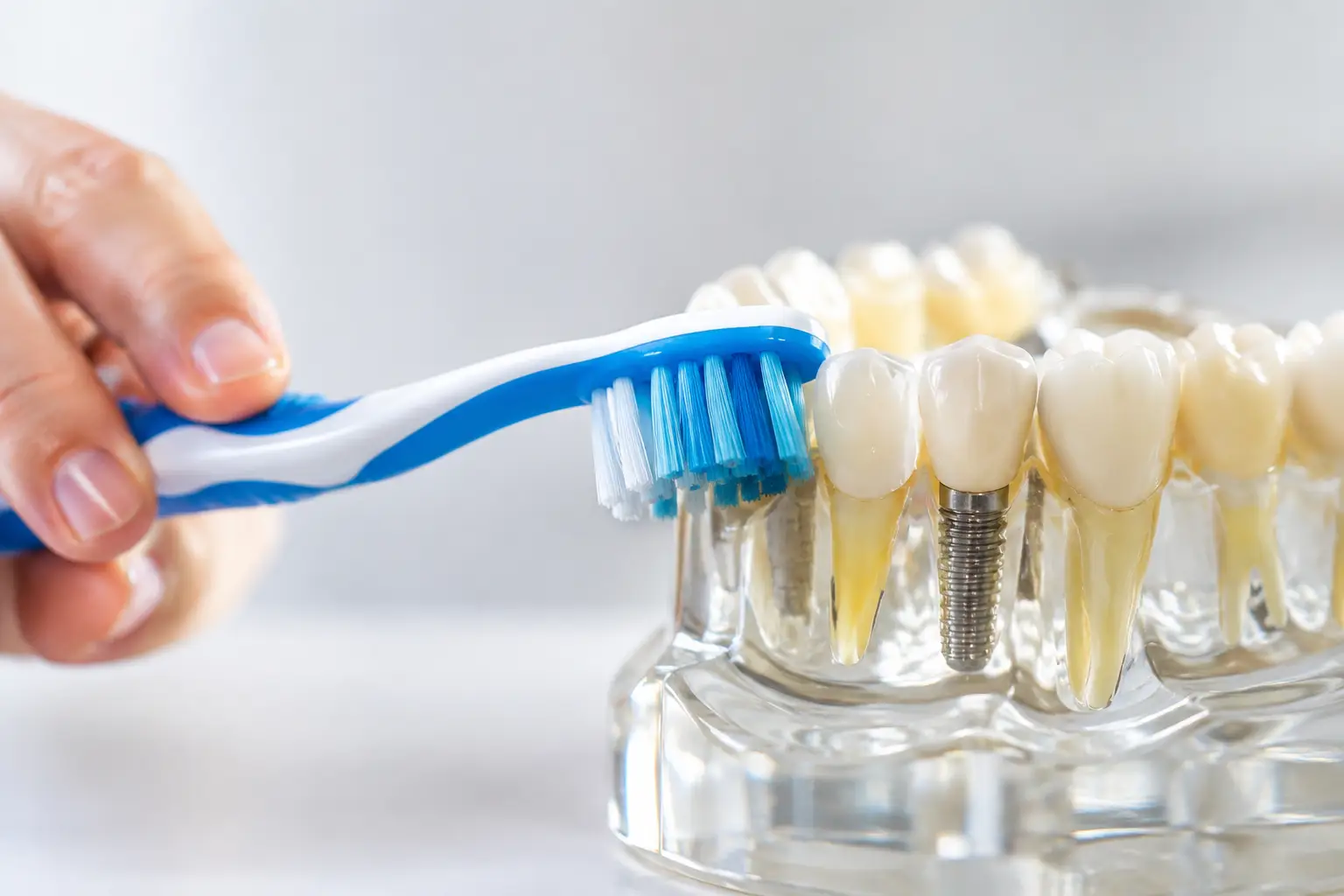
That is why the goal is not simply to make the crown look clean. It is to clean the gumline, the sides of the implant crown, and the spaces your toothbrush cannot reach.
How to brush around implants step by step
Use a soft-bristled toothbrush twice a day for two full minutes. A soft manual brush can work very well when used carefully, while an electric toothbrush with a pressure sensor can be especially helpful for people who tend to brush too hard. The best choice is the one you will use consistently and comfortably.
Place the bristles at a slight angle toward the gumline of the implant crown. Use small, gentle circles or short back-and-forth strokes. Spend a few extra seconds on the front, back, and chewing surfaces of the crown, then trace the brush along the edge where the crown meets the gum. Avoid scrubbing with heavy pressure. Brushing harder does not remove more plaque, and it can irritate delicate gum tissue.
Clean the inside surfaces carefully. The tongue-side area of lower implants and the palate-side area of upper implants are easy to rush through, particularly when an implant is toward the back of the mouth. A small-headed toothbrush can make these areas easier to reach.
Use fluoride toothpaste unless your dental professional has recommended a different product. Fluoride will not harm your implant restoration and still protects the natural teeth around it. If you use a whitening toothpaste, choose one that is not overly abrasive. Aggressive abrasive products may dull the polish of some restorations over time and can be uncomfortable for sensitive gums.
After brushing, look closely at the gumline in the mirror. You are checking for food debris, a sticky film, or bleeding. Occasional bleeding is not something to ignore around an implant. It is a signal to clean more thoroughly and arrange a dental assessment if it continues.
Clean between the implant and neighboring teeth
A toothbrush cannot fully clean between teeth or beneath the contact areas around an implant crown. Interdental cleaning once a day is part of implant care, not an optional extra.
For a single implant crown, floss may be appropriate if it slides through without shredding or catching. Guide it gently below the contact point and curve it against the side of each tooth or crown. Do not snap floss down into the gums. Some patients do best with implant-safe floss, a soft floss tape, or an interdental brush selected to fit their space.
Interdental brushes are particularly useful when there is enough room between the implant crown and nearby teeth. The brush should slide in with light resistance, not force. A brush that is too large can traumatize the gums, while one that is too small may not clean effectively. Your hygienist can recommend the size and type that matches your mouth.
If you have an implant bridge, cleaning underneath it is essential. A floss threader, implant bridge floss, or a purpose-designed cleaning aid can help you pass material beneath the artificial teeth. Gently sweep it back and forth along the underside of the bridge and near the gumline. This can feel unfamiliar at first, but it becomes faster with a little practice.
A water flosser can be a useful addition, especially for bridges, limited dexterity, or areas that trap food. Use it as a supplement to brushing and the interdental method recommended by your dental team. It should not be your only method of cleaning between teeth if plaque remains attached to the surfaces.
The tools that help – and the ones to use carefully
Most implant patients need only a soft toothbrush, toothpaste, and one effective way to clean between teeth. Your specific restoration determines the details. A person with one implant crown may need a different routine from someone with a full-arch fixed bridge.
Avoid using sharp objects, metal picks, or improvised tools to remove food around an implant. These can injure the gums or scratch restoration surfaces. If something is persistently trapped, contact your dental office rather than digging at it.
Antibacterial mouth rinse may be recommended for a short period after implant surgery or if gum inflammation is present. It is not a substitute for physically removing plaque with brushing and interdental cleaning. Long-term use of certain rinses can cause staining or alter taste, so follow the directions given by your dentist rather than adding one automatically.
Brushing after implant surgery
The first days after implant placement are different from long-term care. Your surgical team may ask you to avoid brushing directly over the surgical site briefly or to use a prescribed rinse while the area begins to heal. Follow those instructions exactly, even if they differ from your usual routine.
Once you are cleared to brush the area, use an extra-soft brush and a very light touch. Do not pull on stitches or force floss around the site before you have been told it is safe. Healing timelines vary based on the procedure, bone grafting, gum treatment, and your overall health. When in doubt, ask your dental team what is appropriate for your stage of healing.
Common mistakes that can put implants at risk
The most common issue is concentrating on the visible crown while missing the gumline. Plaque is not always obvious, especially on a back implant or beneath a bridge. Skipping interdental cleaning creates the same problem because the tight spaces between teeth are where bacteria can remain undisturbed.
Another mistake is treating bleeding as normal. Healthy gums should not routinely bleed when you brush or clean between teeth. Bleeding, bad breath that does not improve, tenderness, pus, a receding gumline, or a change in how the implant crown feels all deserve professional attention.
Do not assume an implant is indestructible because it cannot get a cavity. Natural teeth around it can still decay, and the implant’s supporting tissues need ongoing care. Smoking, poorly controlled diabetes, teeth grinding, and inconsistent cleanings can all affect long-term implant health. If you grind your teeth, a custom night guard may help protect both the implant restoration and your natural teeth from excessive force.
Keep professional implant cleanings on schedule
Home care is the foundation, but it cannot replace professional monitoring. During routine visits, your dentist and hygienist can assess the gum tissues, measure areas around the implant when appropriate, check how the crown fits, and remove hardened buildup that brushing cannot remove.
The right recall schedule depends on your gum health, history of periodontal disease, number of implants, home-care routine, and risk factors. Some patients do well with standard preventive visits, while others benefit from more frequent periodontal maintenance. Personalized recommendations are far more useful than a one-size-fits-all schedule.
At Yonge and Bloor Dental Care, implant follow-up is approached as part of your overall oral health plan, with gentle hygiene care and clear guidance on the tools that fit your restoration and routine. If cleaning around your implant feels difficult, uncomfortable, or confusing, bring the tools you use to your appointment. A few minutes of hands-on instruction can make daily care feel much more manageable – and help protect the confident smile your implant was designed to restore.