A denture that shifts while you talk, rubs a sore spot at lunch, or makes favorite foods difficult can affect far more than your smile. When considering implant dentures versus conventional dentures, the right choice comes down to your health, bone support, lifestyle, budget, and what you want daily life to feel like after treatment.
Both options can restore missing teeth and improve appearance. The difference is how they stay in place and how they interact with your jaw. A personalized examination is the best way to understand which solution can provide dependable comfort and function for you.
What conventional dentures do
Conventional dentures are removable appliances designed to replace a full arch of missing teeth or several missing teeth. Full dentures rest on the gums, while partial dentures use remaining natural teeth for support. They are custom-made to restore the look of a natural smile and help with speaking and chewing.
For many people, conventional dentures are a practical starting point. They do not require surgery, treatment can often be completed more quickly than implant-based options, and the initial cost is generally lower. Modern materials and careful fitting can create dentures that look natural and feel more comfortable than many people expect.
Still, a conventional denture is supported by soft gum tissue rather than anchored directly to the jaw. Denture adhesive may help some patients feel more secure, particularly with a lower denture, but it does not stop the gradual changes that occur in the jawbone after teeth are lost. Over time, the shape of the gums and bone can change, so dentures may need relining, adjustment, or replacement to maintain a comfortable fit.
What implant dentures do differently
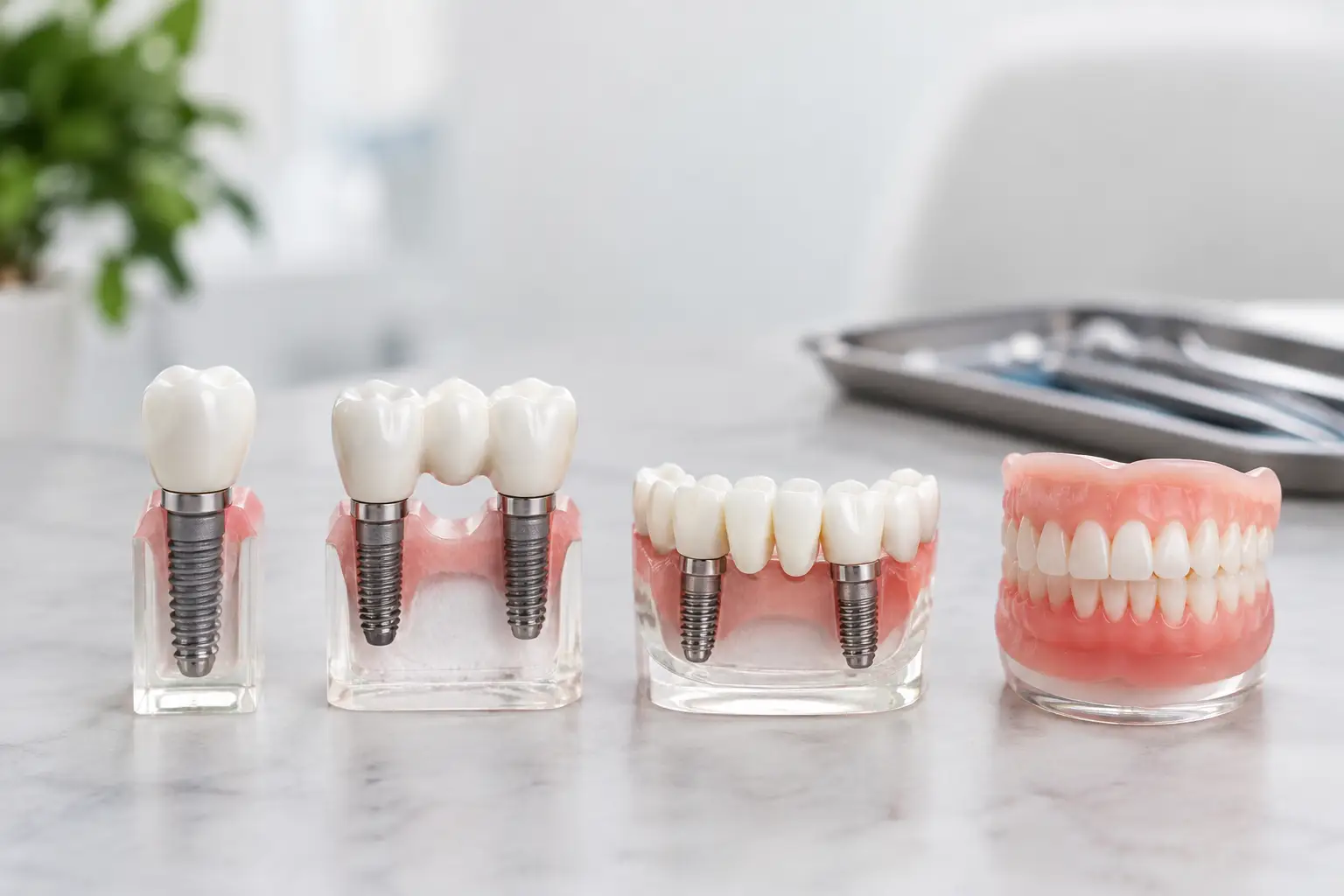
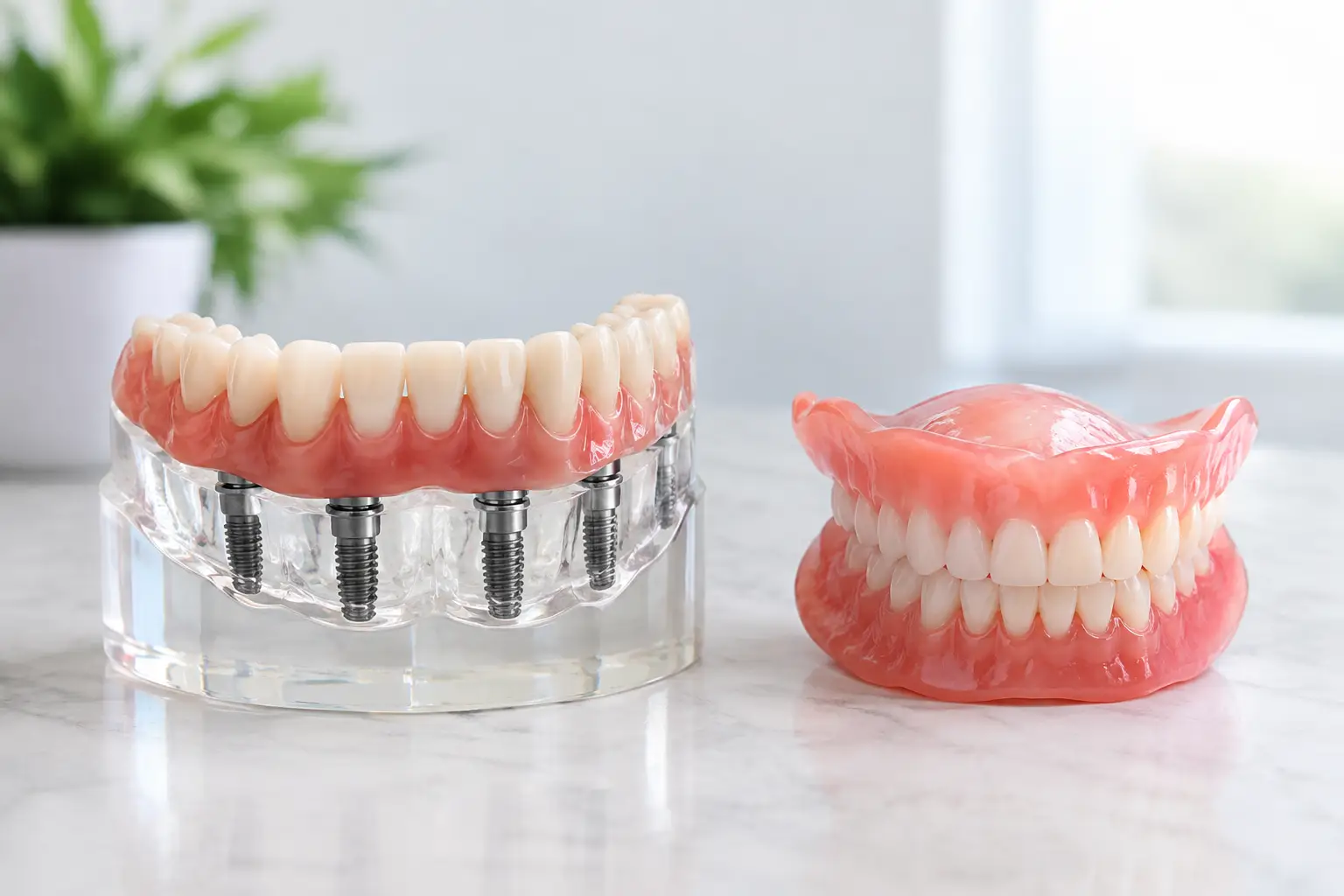
Implant dentures are dentures stabilized by dental implants, which are small posts placed in the jawbone to act like tooth roots. After the implant area heals, the denture connects to those implants through specially designed attachments or a fixed restoration.
There are two common approaches. An implant-supported overdenture is removable for cleaning but snaps securely onto implants. A fixed implant denture is attached by a dental professional and remains in place day to day. The most appropriate design depends on the condition of your bone, the number and location of implants needed, your oral hygiene needs, and your personal preference.
Because implant dentures have a secure foundation, they usually move far less than traditional dentures. Many patients find this improves confidence when speaking, laughing, and eating. Implants can also help stimulate the jawbone, which may reduce the bone loss that commonly follows tooth loss.
Implant treatment does involve surgery and a longer planning process. Some patients need bone grafting before implants can be placed, and healing time is often needed before the final denture is delivered. Advanced imaging and detailed treatment planning help your dentist assess these factors before recommending a path forward.
Implant dentures versus conventional dentures: comfort and function
Comfort is often the first concern for patients who have struggled with loose or painful dentures. A well-made conventional denture can be comfortable, especially when the gums are healthy and the fit is regularly maintained. But because it sits on the gums, pressure during chewing can sometimes create sore areas. Lower dentures are particularly prone to movement because the tongue and surrounding muscles can dislodge them.
Implant dentures distribute chewing forces through the implants and jawbone rather than relying entirely on the gums. This added stability can make a meaningful difference with foods that require more bite force, such as crisp vegetables, meat, or apples. It may also reduce the need for adhesive.
That does not mean implants are automatically the better choice for every patient. Surgery may not be suitable without additional preparation for someone with certain health conditions, insufficient bone, untreated gum disease, or habits that interfere with healing, such as smoking. A dentist will review your medical history and oral health carefully rather than treating implants as a one-size-fits-all answer.
Appearance, speech, and confidence
Both conventional and implant-supported dentures can be designed to create a natural-looking smile. Tooth shape, shade, gum color, facial proportions, and the way the lips are supported all matter. Thoughtful planning is especially valuable when replacing many teeth because dentures can influence the overall appearance of the face.
Speech usually improves as patients adapt to any new denture. With conventional dentures, movement may occasionally affect pronunciation until the muscles of the mouth adjust. Implant stabilization can reduce movement, which some patients find reassuring in professional, social, or family settings.
A trial smile, digital planning, and clear conversations about your goals can help shape a result that looks like you. The goal is not simply to fill spaces. It is to create a smile that feels comfortable and believable when you use it every day.
Cost and long-term value
Conventional dentures usually have a lower upfront cost because they do not include implant surgery, components, or surgical planning. They may be the most accessible option when budget, timing, or health considerations make implant treatment less practical.
Implant dentures are a larger initial investment. The total cost can include imaging, extractions when needed, bone grafting, implant placement, healing visits, attachments, and the final prosthetic teeth. The exact treatment plan matters more than a broad price range, since two implant cases can be very different.
Looking only at the initial fee can leave out part of the picture. Conventional dentures may require periodic relines and replacement as the mouth changes. Implant dentures also need maintenance: attachments on removable overdentures can wear, and the prosthetic teeth may eventually need repair or replacement. Good daily care and regular dental visits protect either investment.
Insurance coverage varies widely. Ask for a written treatment plan that separates the stages of care and clarifies potential coverage, payment options, and expected maintenance. Clear financial information makes it easier to decide without feeling rushed.
Daily care is different, but essential for both
A conventional denture should generally be removed each night, cleaned with a denture brush and appropriate cleanser, and stored as directed to prevent warping. The gums, tongue, and any remaining natural teeth also need daily cleaning. Never use hot water or abrasive toothpaste on a denture, as these can damage its surface.
A removable implant overdenture is also taken out for cleaning. You will clean around the implant attachments, the denture itself, and the gums beneath it. A fixed implant denture stays in the mouth, so cleaning tools such as specialized brushes, floss threaders, or water flossers may be recommended to clean beneath the restoration.
Implants cannot develop cavities, but the surrounding tissues can become inflamed or infected without consistent plaque control. Regular professional maintenance is essential for checking the fit, bite, attachments, gums, and implant health.
Who may be a good candidate for each option?
Conventional dentures may be well suited to someone who wants a non-surgical replacement option, needs treatment completed on a shorter timeline, or has medical or bone-related factors that make implants less predictable. They can also be an excellent temporary solution while a longer-term restorative plan is being considered.
Implant dentures may be worth exploring if your current dentures move, you avoid foods because chewing feels difficult, or you want greater stability. Healthy gums, adequate bone or the ability to rebuild bone, and a commitment to home care all support successful implant treatment. Age alone is not usually the deciding factor. Overall health and healing capacity matter much more.
An examination may include digital X-rays or 3D imaging, a review of your bite and gum health, and a discussion of what has or has not worked with past dentures. At Yonge and Bloor Dental Care, this personalized planning helps patients understand the choices in front of them without pressure.
Choosing a solution that fits your life
The best denture is the one that supports your health, comfort, and daily routine. Some patients are happiest with a carefully fitted conventional denture; others find that the security of implants changes how they eat, speak, and smile. Start with a comprehensive consultation, bring your questions about comfort and cost, and choose a treatment plan that feels sustainable for the years ahead.