A missing tooth can change more than a smile. It can make a favorite meal harder to enjoy, affect speech, shift pressure onto nearby teeth, and leave many people self-conscious in meetings, photos, or everyday conversations. When comparing partial dentures versus bridges, the better choice is rarely about choosing the “best” treatment in general. It is about choosing the option that protects your oral health, fits your lifestyle, and feels manageable for you.
Both treatments replace missing teeth, restore appearance, and help improve chewing. Their designs, daily routines, costs, and effects on surrounding teeth are quite different. A personalized exam is the most reliable way to decide, especially if you have gum disease, tooth decay, several missing teeth, or dental anxiety that has delayed care.
Partial Dentures Versus Bridges: The Main Difference
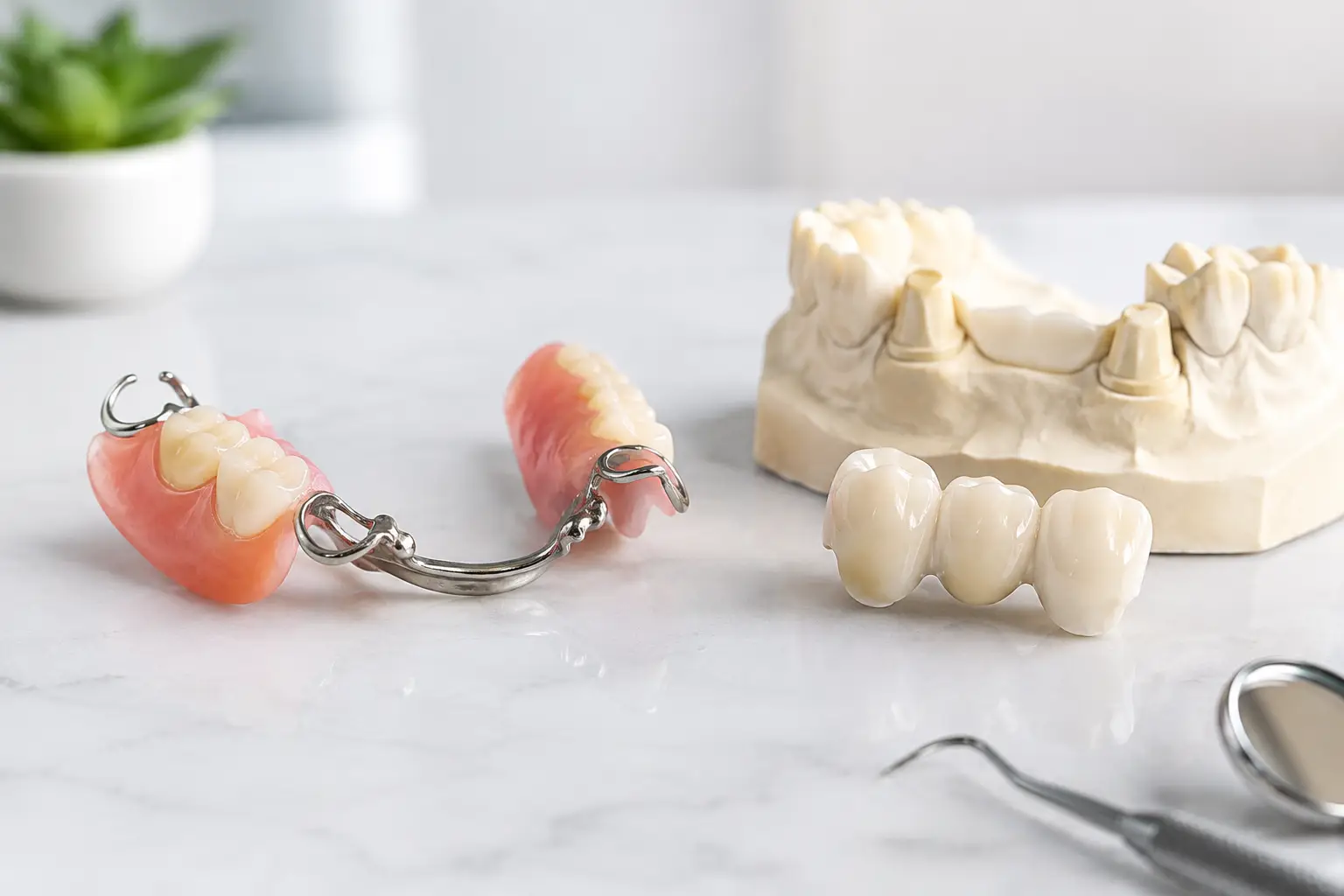
A partial denture is a removable appliance that replaces one or more missing teeth. The replacement teeth are attached to a gum-colored or metal framework that rests along the gums and is designed to stay in place with support from your remaining teeth. You remove it for cleaning and usually take it out at night.
A dental bridge is fixed in place. It uses one or more replacement teeth, called pontics, to fill a gap. In a traditional bridge, crowns placed on the teeth beside the gap support the replacement tooth or teeth. Some bridges may be supported by dental implants instead of natural teeth.
That removable-versus-fixed distinction shapes much of the decision. A partial denture may be appropriate when several teeth are missing in different areas of the mouth. A bridge can be an excellent choice when the gap is limited and the neighboring teeth are healthy enough to support it, or already need crowns.
When a Partial Denture May Make Sense
Partial dentures are often a practical option for patients missing multiple teeth, particularly when the missing teeth are not all beside one another. They can replace teeth across a larger area without placing a crown on every neighboring tooth.
They are also generally less costly upfront than a fixed bridge or implant-supported restoration. For a patient who needs to restore function soon while planning future treatment, a partial denture may provide a useful solution. It can also be adjusted or modified if additional teeth are lost later, although that is not always ideal or possible depending on the appliance.
Modern partial dentures can look more natural and feel more refined than many people expect. Options may include metal frameworks for strength, flexible materials for a more discreet appearance, or acrylic designs. The right material depends on the number and location of missing teeth, your bite, and the condition of your gums and remaining teeth.
The trade-off is that a partial denture takes an adjustment period. It may initially feel bulky, create sore spots, or move slightly while eating or speaking. Proper fit matters greatly. A well-designed partial denture should be stable and comfortable, but changes in the gums and jawbone over time can mean it needs adjustment, relining, or replacement.
Daily care for a partial denture
A partial denture requires consistent cleaning outside the mouth. It should be removed, brushed with a product intended for dentures, and rinsed after meals when possible. Your natural teeth, gums, and tongue still need thorough daily brushing and flossing.
It is also wise to handle the denture over a folded towel or a sink partly filled with water. Dentures can crack if dropped. Never use hot water, which can warp the appliance, and avoid sleeping in it unless your dentist gives specific instructions otherwise.
When a Dental Bridge May Be a Better Fit
A bridge is often appealing because it is fixed. Once cemented, it stays in place and is cared for much like natural teeth. Many patients appreciate not having to remove an appliance at night or before cleaning.
For a single missing tooth or a short gap, a traditional bridge can provide a stable, natural-looking result. It may be especially sensible when the teeth on either side already have large fillings, cracks, or existing crowns and would benefit from full coverage anyway.
Bridges can restore chewing more predictably than some removable options, particularly for patients who find it difficult to adapt to a partial denture. High-quality ceramic materials can be color-matched and shaped to blend naturally with the surrounding smile.
The key consideration is that a traditional bridge requires preparation of the supporting teeth. Even if those teeth are healthy, some enamel must be reshaped to make room for crowns. That is a permanent change. A bridge also depends on the long-term health of its supporting teeth and gums. If decay or gum disease develops around one supporting tooth, the entire bridge may be affected.
Caring for a bridge
Brushing twice daily remains essential, but cleaning beneath a bridge requires extra attention. Floss threaders, specialized bridge floss, or a water flosser may help clean under the replacement tooth where a standard flossing technique cannot reach.
Regular dental visits are important because plaque can collect near the edges of the crowns. Early detection of gum inflammation or decay helps protect both the bridge and the natural teeth supporting it.
Comparing Comfort, Appearance, and Function
Comfort is personal. Some patients adapt quickly to a partial denture and value its conservative approach. Others strongly prefer the fixed feeling of a bridge. If you have a sensitive gag reflex, a partial denture that covers part of the palate may be harder to tolerate, although design options can sometimes reduce coverage.
Appearance also depends on the specific case. A bridge is fixed and can be shaped to closely match nearby teeth, which makes it a popular option for visible areas of the smile. Partial dentures can also be natural-looking, but clasps may be visible in certain locations. Your dentist can discuss where those clasps would sit before treatment begins.
For chewing, a bridge usually feels closer to natural teeth because it does not move during function. A partial denture can still improve eating significantly, but patients may need time to learn which foods are easiest at first. Starting with softer foods and taking smaller bites can make the transition more comfortable.
Cost and Long-Term Value
The initial cost of a partial denture is commonly lower than a bridge. However, upfront price tells only part of the story. A partial denture may eventually need repairs, adjustments, relines, or replacement as your mouth changes. A bridge may have a higher initial investment but can last many years with excellent hygiene, regular checkups, and healthy supporting teeth.
Insurance benefits vary by plan, and coverage may differ for removable and fixed restorations. For patients using dental benefits or the Canadian Dental Care Plan, it helps to review eligibility, expected coverage, and any out-of-pocket cost before beginning care. Clear treatment planning should include those conversations, not leave them until the day of treatment.
The Oral Health Factor Many Patients Miss
Neither a partial denture nor a traditional bridge replaces the tooth root beneath the gumline. After a tooth is lost, the jawbone in that area can gradually shrink because it no longer receives stimulation from chewing. This does not mean dentures or bridges are poor choices. Both can be highly effective restorations. It simply means they do not address bone preservation in the same way as a dental implant.
For some patients, an implant-supported crown or implant-supported bridge may be worth discussing as another option. Implants can help preserve bone and do not require crowning neighboring teeth, but they involve surgery, healing time, and a higher investment. Not every patient is a candidate without additional treatment, particularly when bone volume or gum health is limited.
How to Choose With Confidence
The best decision begins with a complete evaluation of your teeth, gums, bite, bone levels, and goals. Digital imaging and a careful clinical exam help identify concerns that may not be obvious from the gap alone, such as hidden decay, teeth that are drifting, or bite forces that could shorten the life of a restoration.
A bridge may be the stronger choice when you have a short gap, healthy support teeth that already need crowns, and a strong preference for a fixed option. A partial denture may be better when multiple teeth are missing, the gaps are spread across the mouth, or preserving nearby teeth and controlling initial cost are priorities.
You do not need to decide based on discomfort, embarrassment, or assumptions about what treatment will feel like. At Yonge and Bloor Dental Care, personalized planning is designed to make the options clear, comfortable, and realistic for your needs. Replacing missing teeth is not only about filling a space – it is an opportunity to protect the way you eat, speak, smile, and care for your health over the years ahead.