
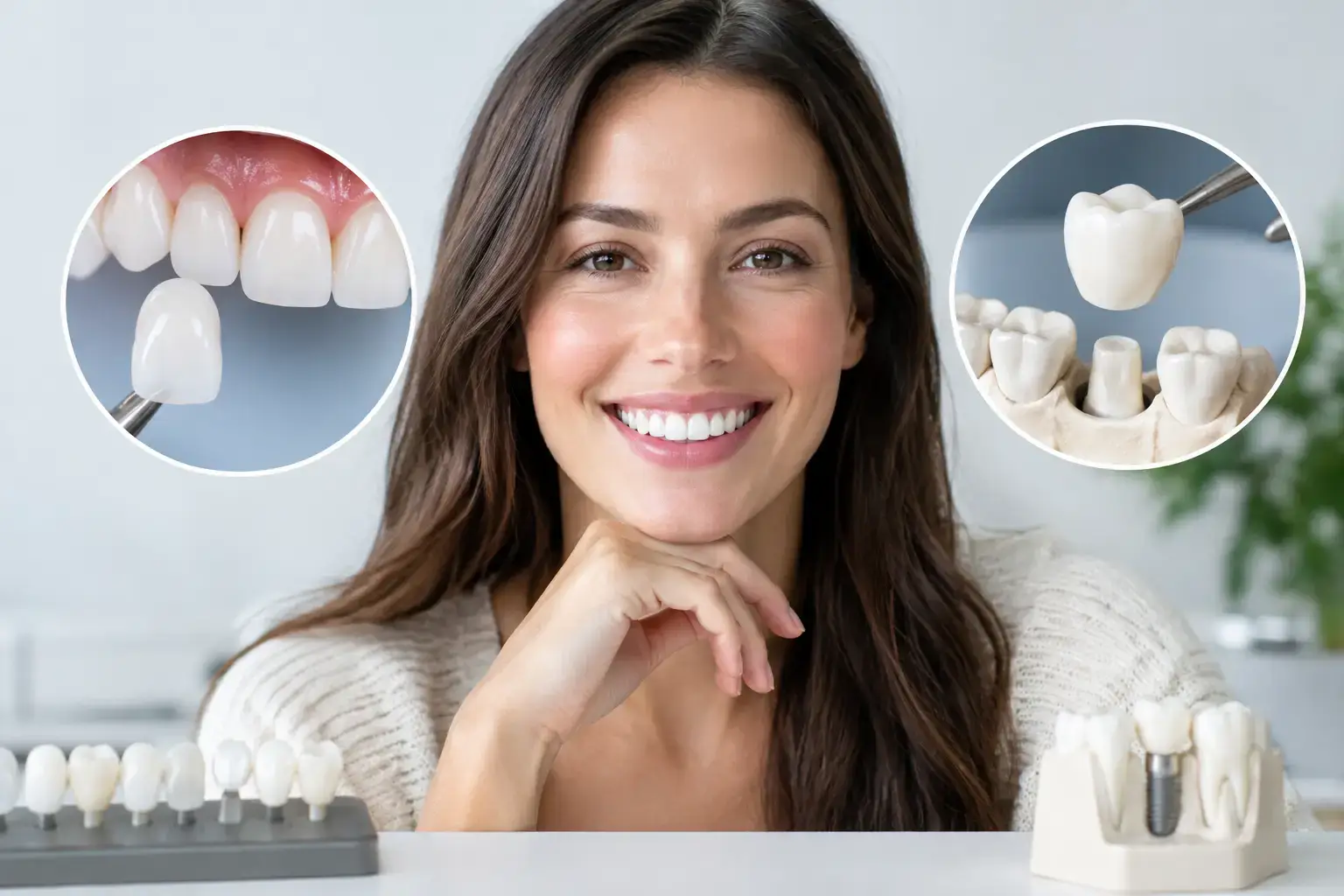
A front tooth that looks chipped in photos needs a different solution than one that hurts when you chew. That is the central question in veneers versus crowns: are you mainly changing the visible appearance of a healthy tooth, or does the tooth need meaningful protection and rebuilding? Both treatments can create a natural-looking smile, but they solve different clinical problems.
The right choice should never come down to appearance alone. A careful exam, digital imaging, and a conversation about your goals help determine whether preserving more natural tooth structure, strengthening a weakened tooth, or combining cosmetic and restorative care makes the most sense.
Veneers versus crowns: the core difference
A veneer is a thin, custom-made shell bonded to the front surface of a tooth. Most veneers are made from porcelain, chosen for its lifelike translucency and resistance to staining. They are designed primarily to improve the look of visible front teeth by adjusting color, shape, length, or minor alignment concerns.
A crown covers the entire visible portion of a tooth, like a protective cap. It is used when a tooth has lost substantial structure or needs support after damage, extensive decay, a large filling, root canal treatment, or a fracture. Modern crowns can be made from high-strength ceramic materials that are both durable and highly natural in appearance.
Put simply, a veneer changes the face of a tooth. A crown rebuilds and protects the tooth from every side. There are situations where either may be possible, but the amount of healthy enamel remaining and the tooth’s overall strength should guide the decision.
When veneers may be the better option
Veneers are often appropriate when teeth are structurally healthy but their appearance does not match the smile you want. They can be a thoughtful option for persistent discoloration that does not respond well to whitening, small chips, uneven edges, minor gaps, worn front teeth, or teeth that look slightly misshapen.
Because a veneer usually requires less preparation than a crown, it can preserve more of the natural tooth. A dentist removes a small amount of enamel from the front surface, when needed, so the veneer sits naturally and does not look bulky. The final restoration is then bonded securely in place.
Veneers are not a shortcut for untreated dental problems. If a tooth has active decay, gum inflammation, a deep crack, or an unstable bite, those concerns need attention first. Bonding a beautiful veneer to a tooth with an unresolved health issue can lead to discomfort, failure, or a more complicated repair later.
They are also best suited to people who can protect their investment. If you clench or grind your teeth, a custom night guard may be recommended. Biting ice, opening packages with your teeth, or chewing hard objects can chip porcelain just as these habits can damage natural enamel.
What veneers can and cannot correct
Veneers can create a remarkably balanced smile when concerns are limited to the front surfaces of the teeth. They may make one dark tooth blend in, close small spaces, or create more consistent proportions across several teeth. For patients considering a broader smile change, digital smile design can help preview shape, symmetry, and color before treatment begins.
However, veneers do not strengthen a severely weakened tooth. They also do not correct major crowding, significant bite problems, or decay between teeth. Orthodontic treatment, restorative care, or a crown may be a healthier first step in those situations.
When a crown is the healthier choice
A crown is usually recommended when the tooth needs protection, not just cosmetic improvement. For example, a tooth with a large old filling may have thin remaining walls that could fracture under normal chewing pressure. A crown can hold the tooth together and restore its shape, function, and appearance.
Crowns are commonly used after root canal therapy because treated teeth can become more brittle over time. They may also be recommended for teeth with extensive decay, a broken cusp, heavy wear, or a crack that affects the tooth’s strength. In some cases, a crown is placed over a dental implant to replace a missing tooth.
While crowns require more shaping of the tooth than veneers, that preparation is purposeful. The crown needs enough space for strong restorative material around the entire tooth. When a tooth is already heavily damaged, trying to preserve a thin outer layer simply to place a veneer may not be the conservative choice. The most conservative treatment is the one that gives a compromised tooth the best chance of lasting comfortably.
A well-designed ceramic crown does not have to look like a traditional, opaque cap. Shade, translucency, contour, and gumline harmony all matter, especially for front teeth. Advanced planning allows restorative treatment to support both a healthy bite and a smile that feels like your own.
Appearance, durability, and tooth preparation
Patients often ask which option lasts longer. The honest answer is that longevity depends on the material, the condition of the tooth, bite forces, oral hygiene, diet, and regular dental care. Porcelain veneers and ceramic crowns can both last many years when they are properly designed and cared for. Neither is permanent in the sense of never needing maintenance or replacement.
The more meaningful difference is what each restoration is being asked to do. A veneer is thinner and relies on a strong, healthy tooth foundation. A crown is thicker and built to handle a tooth that requires full coverage and reinforcement. Placing a veneer on a tooth that truly needs a crown may increase the risk of chipping or further fracture. Placing a crown on a healthy tooth that only needs a cosmetic adjustment may remove more tooth structure than necessary.
Preparation can vary. Some cosmetic cases may allow minimal-prep or no-prep veneers, but these options are not suitable for every tooth or smile. If the veneer is placed without adequate planning, it can look too prominent or affect how the teeth meet. A personalized evaluation matters more than a one-size-fits-all promise.
How your bite and gum health affect the choice
Your smile is more than the teeth visible in a mirror. The way upper and lower teeth meet can place significant pressure on front teeth and restorations. Clenching, grinding, edge-to-edge bites, and certain chewing patterns may influence whether a veneer is predictable or whether a crown offers better protection.
Healthy gums are equally important. Red, bleeding, or receding gums can affect the appearance and long-term stability of both veneers and crowns. Professional cleanings, periodontal care, and consistent home hygiene help create a stable foundation before cosmetic or restorative treatment begins.
During an exam, your dentist may assess the amount of enamel available, the condition of existing fillings, signs of cracks, gum levels, bite alignment, and X-rays of the roots and surrounding bone. This fuller picture is why an in-person recommendation is more reliable than choosing based on before-and-after photos alone.
Cost and insurance considerations
Costs vary based on the number of teeth involved, the material selected, the complexity of the case, and whether additional treatment is needed first. A single crown may be medically necessary to restore a damaged tooth, while a set of veneers is often an elective cosmetic investment intended to improve a smile’s appearance.
Dental insurance may contribute toward crowns when they are clinically necessary, subject to the details of your plan, limits, and waiting periods. Veneers are frequently categorized as cosmetic and may not receive coverage. It is wise to request a clear treatment plan before moving forward, including expected fees, available insurance information, and whether any alternatives could meet your needs.
For many patients, the best value is not the lowest initial price. It is a treatment plan that addresses the actual condition of the tooth, uses quality materials, and includes guidance for protecting the result over time.
What treatment feels like
Both veneers and crowns are typically completed over more than one visit, although the timeline depends on the case and technology used. After planning and tooth preparation, a temporary restoration may be placed while the custom final restoration is created. At the final visit, the dentist checks fit, bite, color, and appearance before bonding or cementing it in place.
Comfort-focused care can make the experience manageable for patients who feel nervous about dental treatment. Local anesthetic is used during preparation, and options for anxiety-friendly care can be discussed ahead of time. You should feel comfortable asking what each visit involves, how long numbness may last, and what to expect while adjusting to your new restoration.
The best smile treatment is one that respects both your goals and your dental health. Whether your tooth needs a subtle cosmetic refinement or full protective coverage, a thoughtful consultation can turn an uncertain choice into a clear, comfortable next step.