A missing tooth can affect much more than a smile. It may change how you chew, make certain words feel less natural, or leave you avoiding photos and favorite foods. Looking at dental implant examples can make the treatment easier to understand because an implant is not one fixed solution. The right approach depends on how many teeth are missing, where they are located, the health of your gums and jawbone, and what will feel right for your daily life.
A dental implant replaces a tooth root with a small, biocompatible post placed in the jawbone. Once it integrates with the bone, it can support a crown, a bridge, or a full arch of replacement teeth. The visible restoration is designed to blend with your smile while restoring stable chewing function.
Dental implant examples for different needs
The best implant plan is personal. Some patients need to replace a single tooth after an accident or failed root canal. Others have worn dentures for years and want more security. Here are common examples of how implants may be used.
One missing tooth: an implant-supported crown
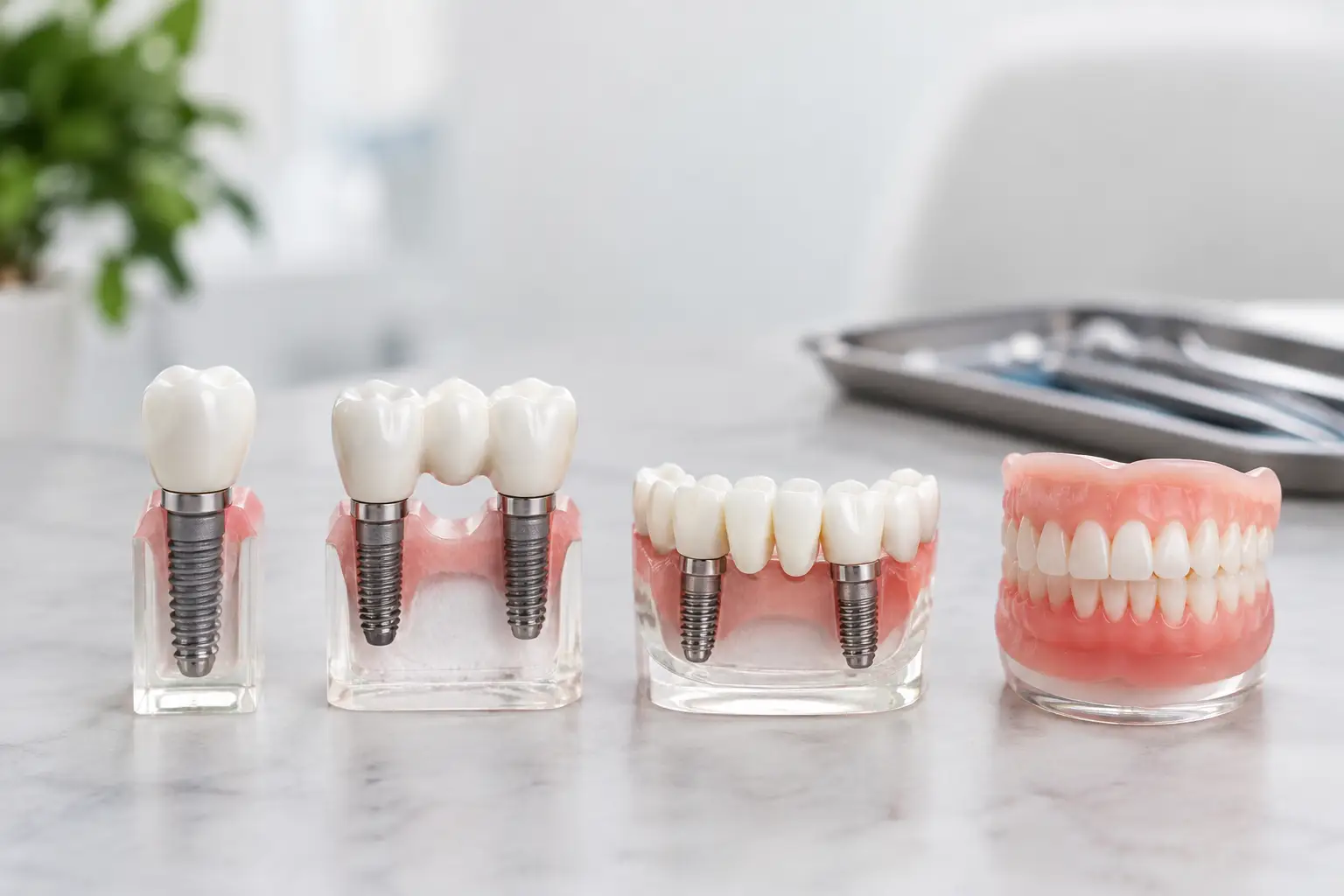
A single implant with a custom crown is often considered when one tooth is missing, especially if the neighboring teeth are healthy. For example, someone who lost a back tooth due to a crack or infection may receive one implant in that space, followed by a crown shaped and shaded to match the surrounding teeth.
This approach does not require reshaping the teeth beside the gap, which is a key difference from a conventional bridge. It can also help maintain the jawbone in the area of the missing tooth. The trade-off is that implant treatment usually takes longer than placing a bridge, since healing time may be needed before the final crown is attached.
Several missing teeth: an implant-supported bridge
When two or more neighboring teeth are missing, individual implants are not always necessary for every space. In some cases, implants placed at either end of the gap can support a bridge of multiple replacement teeth.
Consider a patient missing three adjacent teeth in the lower jaw. Rather than wearing a removable partial denture or preparing healthy teeth for a traditional bridge, they may receive two implants supporting a three-tooth bridge. The result is fixed in place, meaning it stays in the mouth for eating, speaking, and brushing.
Whether this option is appropriate depends on bite forces, bone availability, the location of the missing teeth, and the condition of nearby teeth. A personalized examination and digital imaging help determine whether implant positions can safely support the bridge.
A missing front tooth: appearance and precision matter
Replacing a front tooth calls for careful planning because the final tooth must look natural at close range. A front-tooth implant example may involve a patient who lost an upper incisor after trauma, decay, or a previous restoration that could not be saved.
The dentist considers more than the tooth shade. Gum contours, facial features, bite alignment, and the thickness of the bone all influence the outcome. In some situations, a temporary tooth may be worn during healing so the patient is not left with a visible gap. Digital planning and detailed shade matching can help create a crown that fits naturally into the smile.
In this area, timing matters. If a tooth is being removed, the socket and surrounding bone must be assessed carefully. Some patients may be candidates for an implant placed soon after extraction, while others benefit from a period of healing or bone preservation first.
Full-arch tooth loss: implant-supported dentures
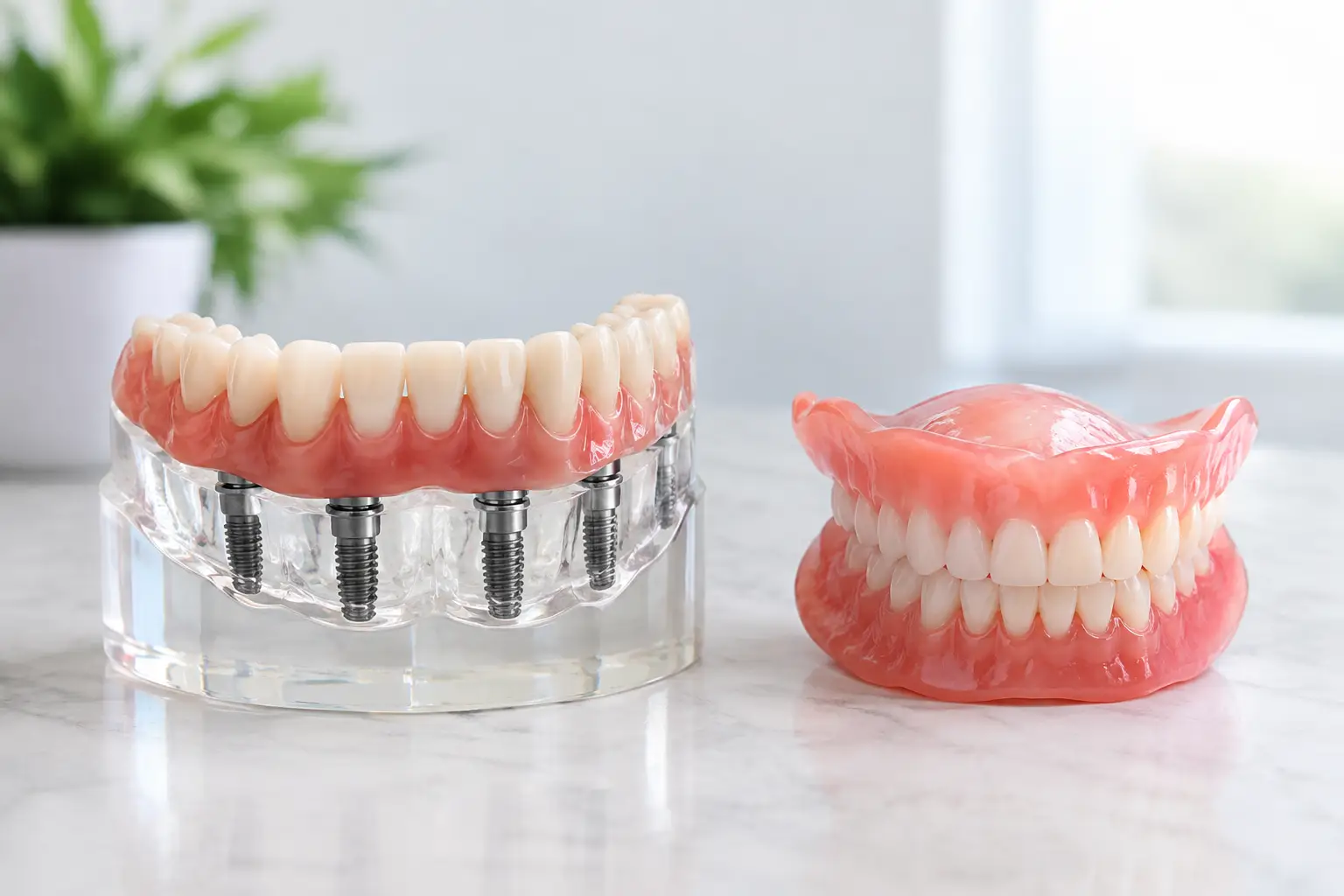
Patients missing all teeth in the upper or lower jaw have several implant-supported options. One is an overdenture, which is a removable denture that connects securely to implants. It can offer much more stability than a conventional denture while still being removed for cleaning.
For instance, a lower denture that lifts during conversation or shifts while eating may be stabilized with a small number of implants. Many patients find that this improves confidence with speaking and allows them to enjoy a wider range of foods. The denture still needs daily care, and the attachments may need maintenance over time, but the difference in retention can be significant.
Another option is a fixed full-arch bridge supported by multiple implants. This restoration is secured by the dental team and is not removed at home. It is often chosen by patients who want a restoration that feels more like natural teeth. Fixed full-arch treatment requires a thorough review of bone, gum health, bite, medical history, and home-care habits. It is a larger investment and requires ongoing professional maintenance, but it can provide a highly stable, functional result.
What happens when there is not enough bone?
Tooth loss can lead to gradual bone loss in the jaw, particularly when a tooth has been missing for a long time. That does not automatically rule out dental implants. It simply changes the planning process.
A bone graft may be recommended to rebuild or preserve bone where an implant will be placed. In the upper back jaw, a sinus lift may sometimes create enough vertical space for an implant. These procedures can extend the treatment timeline, but they are intended to give the implant a healthier foundation.
Advanced imaging allows the dental team to evaluate bone volume, nearby nerves, sinus spaces, and bite relationships before treatment begins. This is one reason an implant consultation should be more than a quick look at the gap. Good planning protects both comfort and long-term function.
What the treatment process can look like
Although every case is different, treatment typically begins with a comprehensive exam, dental imaging, and a conversation about your health history, goals, budget, and concerns. If gum disease, active infection, or untreated decay is present, those issues usually need attention first. Implants depend on healthy supporting tissues.
The implant placement appointment is performed with comfort in mind. Local anesthetic is used, and sedation options may be available for patients who feel anxious or are having more involved treatment. After placement, the implant needs time to bond with the jawbone. Healing may take several months, though the timeline varies based on the area treated, bone quality, and whether grafting or extraction was needed.
Once healing is complete, the final crown, bridge, or denture is designed. The goal is not merely to fill a space. Your restoration should support a comfortable bite, natural-looking smile, and daily routine that feels manageable.
Choosing between implants, bridges, and dentures
Dental implants are a strong option for many people, but they are not the automatic answer in every situation. A traditional bridge may be more suitable when adjacent teeth already need crowns or when a patient prefers a shorter treatment timeline. A removable partial denture can be a practical solution for replacing several teeth at a lower initial cost. Existing medical conditions, smoking or vaping, nighttime grinding, gum health, and bone levels can all affect the recommendation.
Cost is also part of an honest treatment conversation. Implant treatment is often more expensive upfront than some alternatives, particularly when grafting or a full-arch restoration is needed. Its potential long-term value comes from stability, bone support, and avoiding preparation of neighboring healthy teeth in certain cases. Your treatment plan should clearly explain the recommended steps, expected maintenance, and payment or insurance options before you decide.
Caring for implant-supported teeth
Implants cannot develop cavities, but the gums and bone around them still need regular care. Brushing twice daily, cleaning between teeth or around the restoration, and attending routine hygiene visits are essential. Specialized brushes, floss threaders, or water flossers may be recommended depending on the type of restoration.
If you clench or grind your teeth, a night guard may help protect both the implant restoration and your natural teeth. Regular exams also allow the dentist to check your bite, gum health, and the condition of the crown, bridge, or denture before small concerns become larger ones.
At Yonge and Bloor Dental Care, implant planning is centered on the person behind the missing tooth. A comfortable, lasting result begins with a clear conversation about what you need to eat, speak, smile, and feel like yourself again.