
A missing tooth can change more than a smile. It can make chewing feel uneven, affect speech, leave nearby teeth without support, and make everyday moments such as ordering lunch or laughing in a meeting feel more self-conscious. Dental implants are designed to replace both the visible tooth and the root beneath it, creating a stable, natural-looking solution that supports daily comfort and long-term oral health.
For many patients, the decision is not simply about appearance. It is about eating comfortably again, speaking without hesitation, and choosing a treatment that feels like a lasting investment in their health. The right path depends on your mouth, medical history, goals, timeline, and budget, which is why a personal consultation matters.
What dental implants actually replace
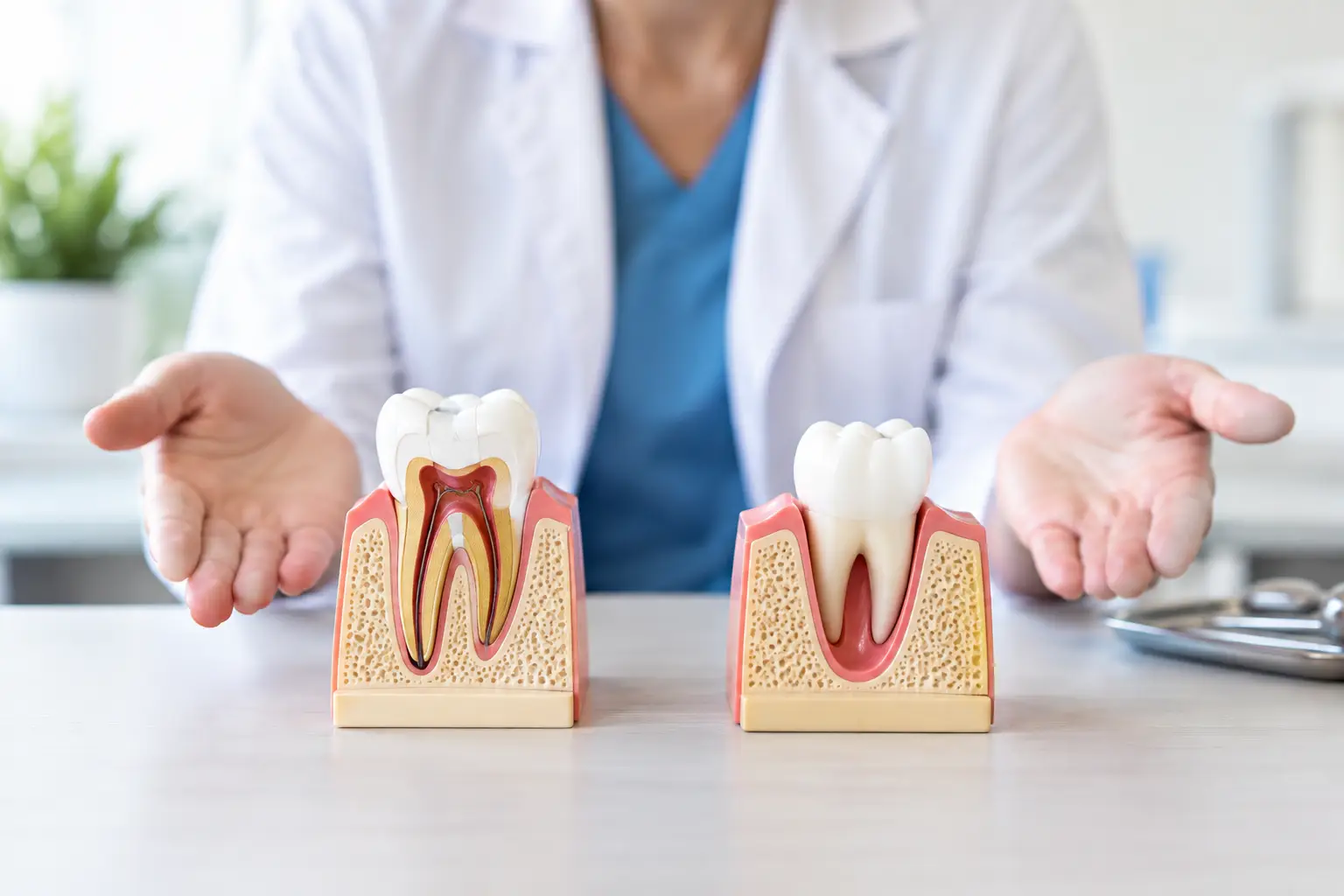
A dental implant is a small, biocompatible post placed in the jawbone where a tooth root once was. After the area heals, the implant supports a custom restoration, most often a crown. Together, these parts replace a single missing tooth without relying on the teeth beside it.
Implants can also support a bridge when several teeth are missing or help secure a full arch of replacement teeth. The approach is tailored to the number and location of missing teeth, the condition of the jawbone, bite forces, and the health of the surrounding gums.
Unlike a removable appliance, an implant is fixed in place. It does not come out for cleaning, and it is designed to feel secure while you eat and speak. The crown is shaped and shaded to fit naturally with your existing teeth, particularly when careful planning and digital imaging are part of the treatment process.
Why replacing a missing tooth can matter
It is common to postpone replacing a back tooth because it is not visible when you smile. However, gaps can gradually affect the rest of the mouth. Adjacent teeth may drift or tip toward the open space, which can alter how the teeth meet. The tooth above the gap may also move downward over time.
The jawbone needs the stimulation created by a tooth root or implant. After a tooth is lost, bone volume in that area may diminish. This is one reason prompt evaluation can be helpful, even if you are not ready to begin treatment immediately.
A dental implant is not the only option. A bridge or removable partial denture may be appropriate depending on your needs. Still, implants offer a distinct benefit: they can replace a tooth without preparing healthy neighboring teeth for crowns. That preservation can be especially valuable when nearby teeth are strong and free of large restorations.
Are you a candidate for dental implants?
Many adults are candidates, including people who have lived with a missing tooth for years. Good candidates generally have healthy gums, enough bone to support the implant, and a commitment to daily oral hygiene and regular dental visits. Age alone is not a barrier. Overall health and healing capacity are more relevant than the number on a birthday card.
Some circumstances need additional planning rather than automatically ruling out treatment. Active gum disease should be treated first. If bone has been lost after an extraction, bone grafting may help create a stronger foundation. Smoking and uncontrolled health conditions can affect healing, so your dental team will discuss these factors openly and without judgment.
A detailed exam is the starting point. Digital X-rays or 3D imaging can show bone levels, tooth roots, nerves, sinuses, and the precise position available for an implant. This planning helps make treatment safer, more predictable, and specific to your smile rather than based on a one-size-fits-all approach.
When immediate placement may be possible
In some cases, an implant may be placed at the same appointment as a tooth extraction. This can reduce the number of surgical visits and may help preserve the shape of the gums and bone. It is not always the best choice, though. Infection, bone quality, the location of the tooth, and the ability to achieve stability all influence the decision.
For other patients, healing first is the more conservative option. Waiting can feel disappointing when you want the process finished quickly, but the treatment sequence should protect the long-term result, not just speed up the calendar.
The dental implant process, step by step
The process begins with a consultation and personalized treatment plan. Your dentist will review your oral health, discuss the tooth you want to replace, explain alternatives, and answer practical questions about timing, comfort, and cost. If you have dental anxiety, speak up early. Comfort-focused care and sedation options may be available for appropriate patients.
If an extraction, bone graft, or gum treatment is needed, that work may come before implant placement. Once the foundation is ready, the implant post is placed in the jawbone during a carefully planned procedure. Local anesthetic is used to numb the area, and many patients are surprised by how manageable the appointment feels.
The implant then needs time to integrate with the bone. This healing process, called osseointegration, commonly takes several months. During that time, a temporary tooth may be considered for visible areas, depending on your treatment plan and bite.
When healing is complete, an attachment called an abutment connects the implant to the final crown. A custom crown is then created to blend with your surrounding teeth in shape, size, and color. Your dentist checks the bite carefully, because a restoration should look natural and function comfortably, not simply fill a space.
What recovery feels like
Most patients experience some tenderness, swelling, or minor bruising after implant placement. These effects are usually temporary and can often be managed with medication, rest, and a soft-food diet for the first few days. Your care team will provide instructions tailored to the procedure you received.
Planning a quieter day after surgery is wise. Choose softer foods, avoid vigorous rinsing or drinking through a straw if instructed, and keep the area clean as directed. Contact your dental office if pain increases after improving, swelling becomes severe, or you have questions about healing. Clear communication is part of good care, especially when you are recovering at home.
Caring for an implant over the long term
Implants cannot develop cavities, but the gums and bone around them still need consistent care. Brush twice daily, clean between teeth every day, and keep up with professional exams and cleanings. Your dentist may recommend specific tools to clean around the crown, bridge, or implant-supported denture.
Gum inflammation around implants can progress if it is ignored. Regular visits allow your dental team to check the health of the tissues, the bite, and the restoration before small concerns become larger ones. If you clench or grind your teeth, a night guard may also help protect the crown and implant from excess force.
With good care, implants can be a durable tooth-replacement option. No dental treatment comes with a lifetime guarantee, and crowns may eventually need repair or replacement due to normal wear. The goal is a restoration that is healthy, functional, and maintainable for years to come.
Understanding cost and treatment choices
The cost of dental implant treatment varies because each plan is different. A straightforward single-tooth implant has different needs than a case involving an extraction, grafting, multiple implants, or a full-arch restoration. The final estimate may include imaging, surgery, the implant post, abutment, temporary restoration, and final crown.
It is reasonable to ask for a clear breakdown before treatment starts. Insurance coverage differs by plan, and coverage may apply to some parts of care but not others. Direct insurance billing and discussion of available payment options can make the process easier to navigate. If you are eligible for public dental benefits, ask whether they may apply to any portion of your care.
The least expensive option is not always the best value if it compromises planning, materials, follow-up, or the health of adjacent teeth. At the same time, implants are not automatically the right answer for every patient. A good recommendation should explain the benefits and limitations of each option in language you can understand.
If a missing tooth is affecting how you eat, smile, or feel about your oral health, you do not need to have every answer before booking a consultation. A thoughtful assessment can turn an uncertain decision into a clear, comfortable plan that fits your health and your life.